Homemade Panettone: the recipe
A festive season favourite and the undisputed king of Christmas tables, Panettone is much more than a dessert: it’s a ritual filled with buttery aromas, citrus notes, and joyful anticipation.
Preparing it at home means rediscovering the slow pleasure and satisfaction of creating something unique—something that can transform your kitchen into a small pastry workshop.
The secret to making it unforgettable? The perfect pairing: a velvety cream or a spicy touch can enhance its sweetness and bring new life to an age-old tradition.
Ingredients for a 1 kg Panettone
To obtain a soft, fragrant Panettone, you need simple but high-quality ingredients all used at room temperature, essential for a perfectly risen texture and balanced flavour.
For the first dough stage
- 100 g refreshed sourdough starter
- 85 g sugar
- 250 g manitoba flour
- 90 g lukewarm water
- 3 egg yolks
- 60 g soft butter
For the second dough stage
- all of the risen first dough
- 60 g manitoba flour
- 25 g sugar
- 2 egg yolks
- 3 g salt
- 40 g soft butter
- 10 g honey
- seeds from one vanilla pod or ½ tsp of extract
For the aromatic emulsion (optional but recommended)
- 20 g butter
- grated zest of one untreated orange and one untreated lemon
- 1 tablespoon honey
- 1 teaspoon vanilla extract or rum
For the mix-ins (candied fruit and raisins)
- 80 g sultana raisins
- 80 g candied orange cubes
- 40 g candied citron (optional)
- 1 tablespoon liqueur (Marsala or rum) to soak the raisins
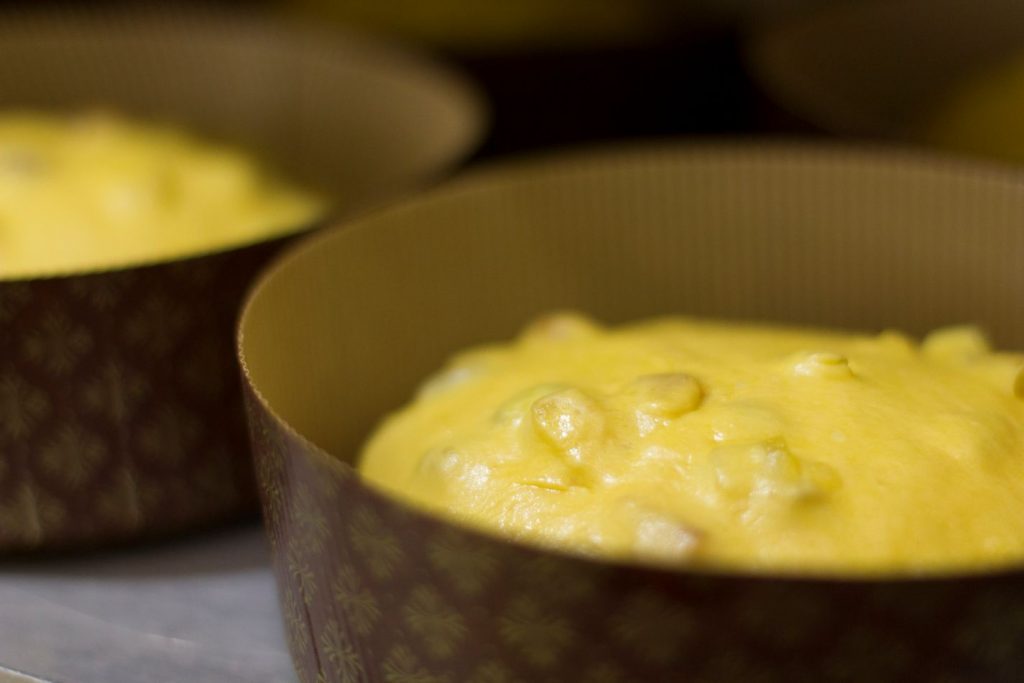
How to prepare homemade Panettone
Making Panettone takes about two days: one for the doughs and rising stages, the other for baking and resting. It’s important to proceed step by step—each phase is essential to developing the structure, aroma, and softness of the dessert.
Equally crucial is managing the time and temperature: dough kept at the right temperature rises better and more evenly.
Let’s see how to prepare it!
Step 1: first dough and first rise
In a stand mixer with a dough hook, combine the water and sugar, then add the sourdough starter and start kneading. Gradually incorporate the flour, and once a homogeneous dough forms, slowly add the egg yolks and soft butter in stages.
Continue kneading until the dough becomes smooth and elastic. Cover and let rise at 26–28°C for about 10–12 hours, until it triples in volume.
Step 2: second dough and adding aromas
Once its risen, take the first dough and add the flour, sugar, and honey. Then add the egg yolks, salt, and soft butter.
Flavour the dough with the aromatic emulsion (made by combining melted butter, orange and lemon zest, honey, and vanilla) and continue kneading until the mixture is shiny and elastic.
Finally, add the well-drained raisins and candied fruit, distributing them evenly without tearing the dough.
Step 3: shaping and rising in the Panettone mold
Transfer the dough onto a lightly buttered surface, shape it into a smooth ball (pirlatura), and place it into a 1 kg Panettone mould.
Cover with cling film and let it rise at 28°C for 7–8 hours, until the dough reaches about 2 cm below the rim of the mold.
Step 4: baking and cooling
Score the top with a cross and place a small knob of butter at the center. Bake in a static oven preheated to 175°C for about 50–55 minutes.
Once baked, pierce the base with two metal skewers and hang the Panettone upside down for at least 6 hours: this crucial step preserves its height and softness.
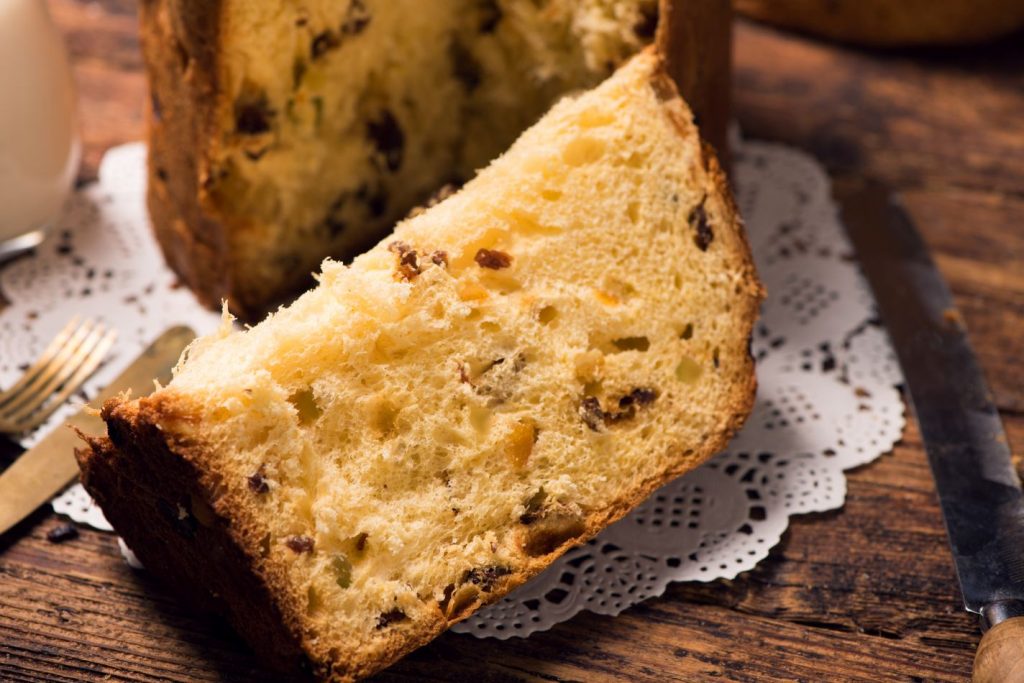
How to serve and pair Panettone
A homemade Panettone deserves to be served with the same care used to prepare it: slice it only when completely cool—preferably 12 hours after resting—and accompany it with pairings that enhance its fragrance and sweetness.
Classic pairing: mascarpone cream
Soft, velvety, and richly flavored, mascarpone cream is one of the most loved pairings for panettone—a timeless presence on festive tables. Its sweetness and airy texture enhance the aromas of the risen cake, creating a perfect balance of delicacy and intensity.
Served next to a slice of Panettone, still slightly warm, it’s the ideal treat to end a Christmas lunch or dinner in a traditional style.
An unusual pairing: Panettone and mostarda
If you’re looking for an original combination that surprises without straying too far from tradition, Panettone with mostarda is an excellent choice.
Venetian mostarda, with its sweet yet mildly spicy notes, creates a delicate contrast that pairs beautifully with the softness of the dough, enhancing its aromas and offering a surprisingly harmonious balance.
For an even tangier taste, citrus or clementine mostarda is a must: the bright, fragrant notes give the panettone a modern and irresistible twist—perfect for the festive season and sure to impress your guests.