Homemade Easter Dove Bread
Although Easter Sunday is still some time away, it’s time to start thinking about one of Italy’s most iconic holiday desserts: Easter Dove Bread, a traditional centrepiece of family gatherings and long lunches with loved ones.
We’ll guide you step by step through the preparation of this fluffy homemade bread, revealing all the secrets to achieve results that could rival an artisan bakery. And don’t worry – whether or not you love candied fruit, or if you have special dietary requirements, you’ll find the perfect version for you, which can be enjoyed with our jams for an even more special flavour.
Ingredients for artisanal Easter Dove Bread
Serves approximately 6 people:
- 3 eggs
- 350 g plain flour
- 90 g sunflower oil
- 170 g milk
- 170 g sugar
- 1 lemon for the grated zest
- 1 orange for the grated zest
- 1 vial almond extract
- 15 g instant yeast
- Almonds for decoration, as desired
- Pearl sugar for decoration, as desired
How to prepare Easter Dove Bread
Preparing an Easter Dove Bread requires some attention to detail, but with our tips, you can easily create a soft and fragrant dessert:
- Take two eggs, separate the whites and yolks into two different bowls, and beat the egg whites until they form stiff peaks.
- Set aside the egg whites, and add the sugar to the bowl with the yolks. Mix with an electric mixer, gradually adding the grated orange and lemon zest and the almond extract.
- Continue mixing while adding the sunflower oil and milk, then gradually incorporate the flour, mixing carefully.
- Add the instant yeast and continue mixing until you get a smooth, elastic mixture.
- At this point, it’s time to decide whether to enrich the dough with candied fruit or leave it plain. Once you’ve made your choice, add the whipped egg whites and gently fold them in with a spatula using an upward motion.
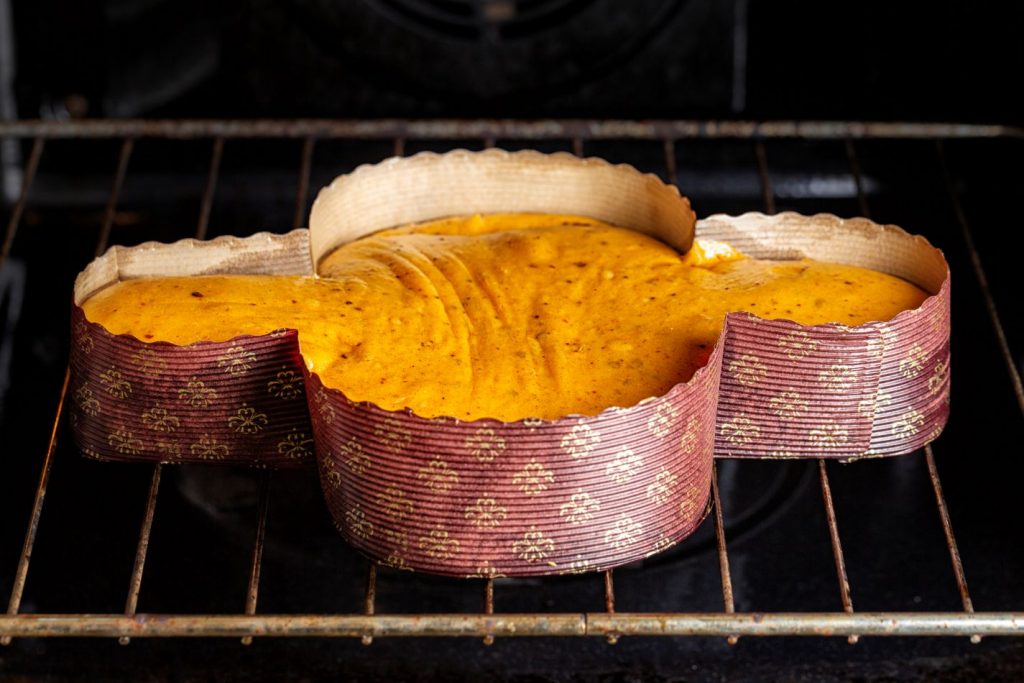
- Transfer the dough into a mould and decorate the surface as desired; we suggest – as per tradition – sugar and almonds.
- Bake in a preheated oven at 180 °C (350 °F) for about 40 minutes. Your Colomba will be ready when a sweet crust forms on the surface.
With or without candied fruit?
The presence of candied fruit in the dough, besides adding a sweet note to the mixture, also plays a surprisingly important role in ensuring your dessert is the correct final consistency.
When enriched with candied fruit, the dough is naturally moister and maintains its softness longer, thanks to the sugars released during baking. On the other hand, the version without candied fruit tends to have a slightly drier consistency, so if you opt for this version, we recommend reducing the baking time by a few minutes to preserve the natural softness of the dough.
Even more delicious with berry jam
To make your Colomba even more special, we suggest a pairing that’s hard to resist: berry jam, with its fresh and lively notes, creates a perfect contrast with the sweetness of the leavened cake.
You can spread a thin layer of jam on the slices while they are still warm, letting it melt slightly, or serve it on the side to allow everyone to adjust the amount to their taste. This lively touch will transform the classic Colomba into an even more refined dessert, perfect not only as an after-dinner treat, but also for Easter breakfast or a gourmet snack.
In case of food intolerances: gluten-free vegan Easter Colomba
Even if you have food intolerances, fear not: you don’t have to give up the pleasure of Easter Colomba. A few adjustments are all it takes to adapt the recipe to every requirement:
- For a gluten-free version, replace the plain flour with a specific gluten-free flour mix for baking.
- To replace the milk, opt for plant-based beverages such as rice or almond milk.
- To eliminate the eggs, we have a simple trick: for each egg, use one tablespoon of potato starch mixed with three tablespoons of water.
With these simple adjustments, the job is done: your Colomba will be perfect, and you can enjoy it however you like!
Storage
This dessert stays fresh for 3–4 days if stored in a cool, dry place in an airtight container or wrapped in plastic wrap. If you notice it’s starting to dry out, warm it slightly before eating: it will be just as soft as freshly baked bread.
Fun fact: how to cut a Colomba
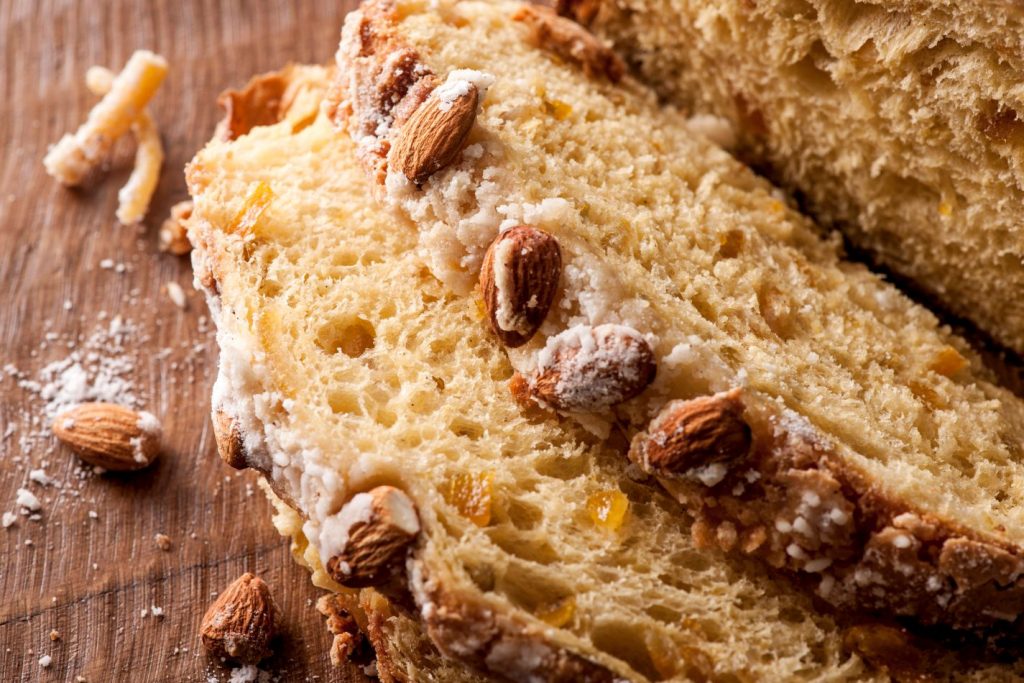
To best enjoy your Colomba, cut it lengthwise from tail to head to create two mirrored halves. Then make crosswise cuts to get regular slices.
This technique ensures each portion has the right amount of crispy glaze on top and soft centre inside. Enjoy!