Pavlova: the original Australian recipe
Have you ever wanted to serve a dessert that’s as visually stunning as it is delicious? The Pavlova is exactly that: an elegant meringue cake with a unique texture, crispy on the outside and soft on the inside, adorned with whipped cream and colourful fresh fruit.
This Australian dessert is named after Russian ballerina Anna Pavlova, whose performances in Oceania in the 1920s inspired the creation of this light, white dessert, reminiscent of her tutu.
Today, we’ll guide you through the preparation of this extraordinary confection, starting with the original recipe.
Ingredients for the original pavlova
The secret of this recipe lies in its simplicity: you’ll only need a few ingredients to create a dessert with a delicate and surprising flavour.
Ingredients for the meringue
- 3 egg whites
- 20 g cornstarch
- 200 g sugar (1 cup)
- 10 g lemon juice
- Vanilla extract to taste
Ingredients for the whipped cream
- 200 g heavy whipping cream (3/4 cup)
- 20 g powdered sugar (2 tablespoons)
Ingredients for the topping
The choice of fruit is personal: you can use your preferred fruits based on the season or your taste. The important thing is that they are fresh and colourful to create that contrast with the white meringue and cream that makes pavlova so irresistible.
The original recipe includes:
- kiwi
- raspberries
- blueberries
- mint
- strawberries
- blackberries
- red currants
- powdered sugar
How to make pavlova
The secret of this dessert lies in the balance of textures: a meringue that’s crispy on the outside but soft on the inside. Achieving this texture requires some attention to detail, but don’t worry: by following our step-by-step instructions, you’ll create a pastry-shop-worthy dessert.
Preparing the meringue base
- First, preheat the static oven to 130 °C (265 °F).
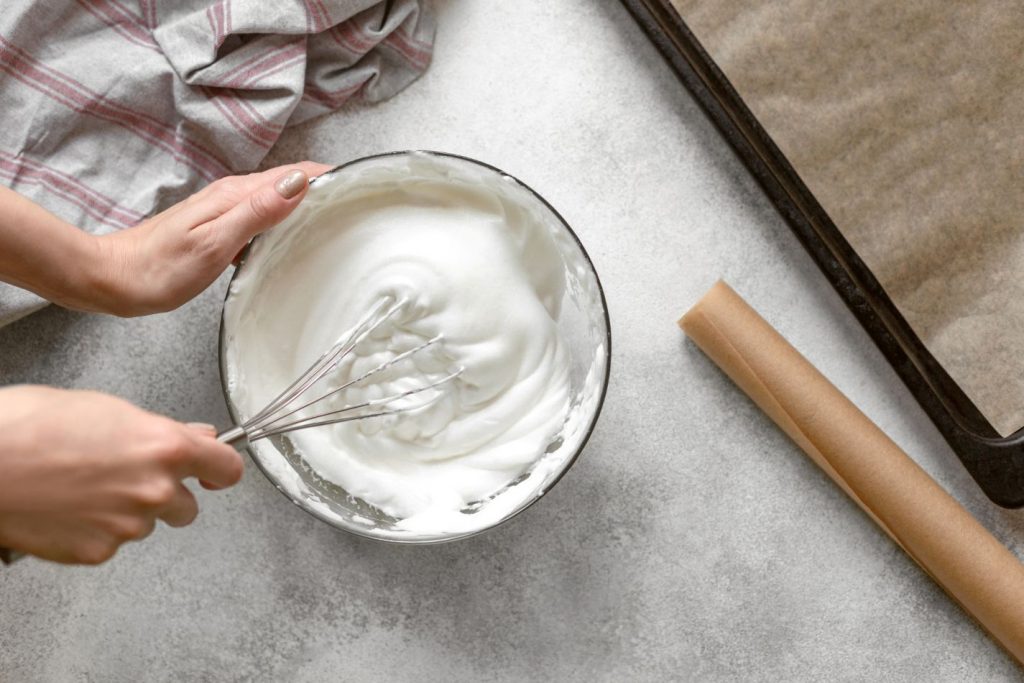
- Separate the egg yolks from the room-temperature whites, pour the whites into a stand mixer bowl with the whisk attachment, and run it at medium-high speed.
- When the egg whites turn white, start adding the sugar gradually.
- After incorporating all the sugar, add the lemon juice.
- Add the vanilla extract and let it be absorbed until you get a firm and consistent meringue.
- Turn off the mixer and add the cornstarch.
- Gently fold in using a spatula with bottom-to-top movements to maintain the mixture’s volume.
- Transfer the meringue onto a baking sheet lined with parchment paper.
- Use a spatula to shape the meringue into a mound about 22-24 cm (8-9 inches) wide and level the surface.
- Slightly hollow out the centre to create a well and shape the sides with upward movements.
- Bake the meringue in the preheated oven at 130 °C (265 °F) for 10 minutes.
- After this time, lower the temperature to 100 °C (212 °F) and continue baking for another 50 minutes, without opening the oven door.
- Turn off the oven and let the pavlova cool for at least 2 hours, keeping the oven door closed.
Preparing the whipped cream and toppings
- To prepare the whipped cream, pour the heavy cream and powdered sugar into a bowl, beat with whisks until it forms firm peaks.
- For the fruit, slice the kiwi into half-moons, quarter the strawberries, wash and dry the blueberries, raspberries, blackberries and currants.
- Gently tap the surface of the meringue to slightly widen the cavity.
- Fill the cavity with whipped cream, decorate the surface with your chosen fruit and garnish with mint leaves.
- Lightly dust with powdered sugar and voilà, your dessert is ready to be enjoyed!
Adding fresh fruit
For the original recipe, it’s recommended to use all the indicated fruits to create a colourful and visually stunning effect. However, as mentioned earlier, you can customise your pavlova using your preferred fruits based on the season or your personal taste.
In the spring months, for example, strawberries, cherries and currants are perfect for decorating your dessert with vibrant colours and fresh flavours. If you prefer a more pronounced contrast, combining sweet fruits like strawberries with tarter ones like kiwi and berries will create a perfect balance that enhances the sweetness of the meringue and the softness of the cream.
Want to try a delicious variation?
If you love the recipe we’ve presented, you can experiment with an even more elegant and versatile version: individual servings offer the opportunity to customise each single dessert, catering to everyone’s preferences.
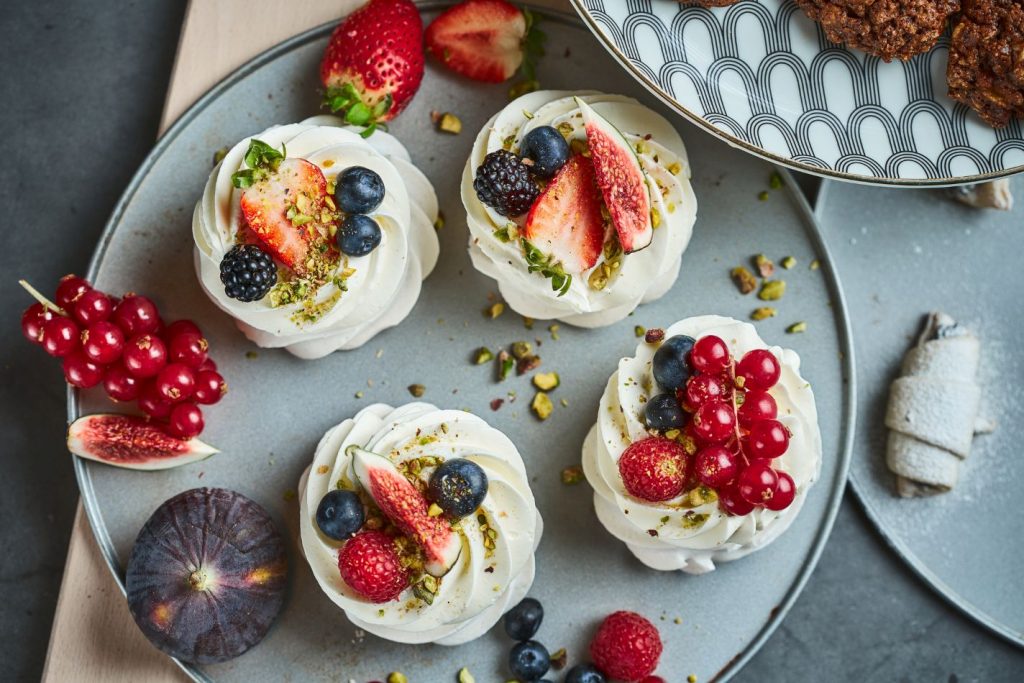
Individual pavlova with jam filling
To prepare mini pavlovas, create 8-10 cm (3-4 inch) discs following the same basic recipe but reducing the baking time to about 40 minutes. The secret of this variation lies not only in customisation but also in adding a thin layer of jam between the meringue and cream.
With Lazzaris jams, you can create your preferred combinations: for example, mixed berry jam balances the sweetness of the meringue with its pleasant tartness, apricot jam adds summery notes, while fig jam creates a delicate contrast with the cream.
Storage
Pavlova should preferably be enjoyed immediately after preparation because the meringue is very sensitive to humidity and quickly loses its characteristic crispness. If necessary, however, you can prepare the base the day before, store it at room temperature in an airtight container, and add the cream and fruit only when ready to serve.
But don’t worry too much about storage: given its deliciousness, this dessert tends to disappear from the plate in the blink of an eye. Enjoy your meal!